AI Growth Zones Are a Routing Problem Before They're a Planning Win
AI Growth Zones make headlines as planning and investment victories. The genuinely difficult work — getting capacity from the substation to the rack — starts only after the announcement.
There's a predictable rhythm to how major infrastructure announcements get reported. An AI Growth Zone is designated. A connection is reserved. Investment figures are quoted. The story, as told in most coverage, ends roughly there — as if reserving grid capacity and announcing a zone were the hard part, and everything downstream is simply execution detail.
For anyone who has actually delivered large-scale electrical infrastructure, that framing skips over the genuinely difficult part entirely.
What an AI Growth Zone designation actually provides
Government's strategic demand proposals — developed jointly with Ofgem and NESO, and accelerated through new powers under the Planning and Infrastructure Act 2025 — aim to let network operators reserve and prioritise grid capacity specifically for projects identified as strategically important. This explicitly includes AI Growth Zones, alongside EV charging hubs and electrified manufacturing sites, as categories that may benefit from reserved capacity, reallocation of capacity released when other projects exit the queue, and prioritisation in future connection application windows.
This is a genuinely useful policy intervention, and it directly addresses a real problem: under the previous purely queue-based allocation system, strategically important projects had no formal mechanism to jump ahead of less critical applications, regardless of national economic significance. AI Growth Zones — often deliberately co-located with new nuclear or renewable generation capacity — get a meaningfully better starting position as a result of this policy.
What it doesn't provide
What a reserved grid connection does not provide is a finished electrical installation. Between the substation or grid connection point and the actual server racks consuming the power, there is a complete construction project's worth of routing, civil works, cable installation, and commissioning — and the scale involved in a genuine AI Growth Zone facility makes this a substantial undertaking in its own right.
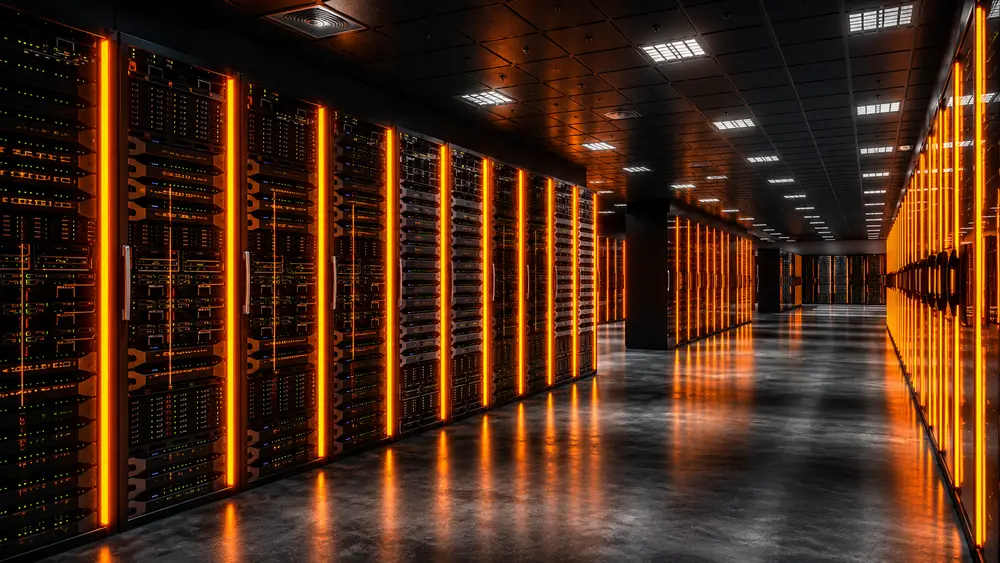
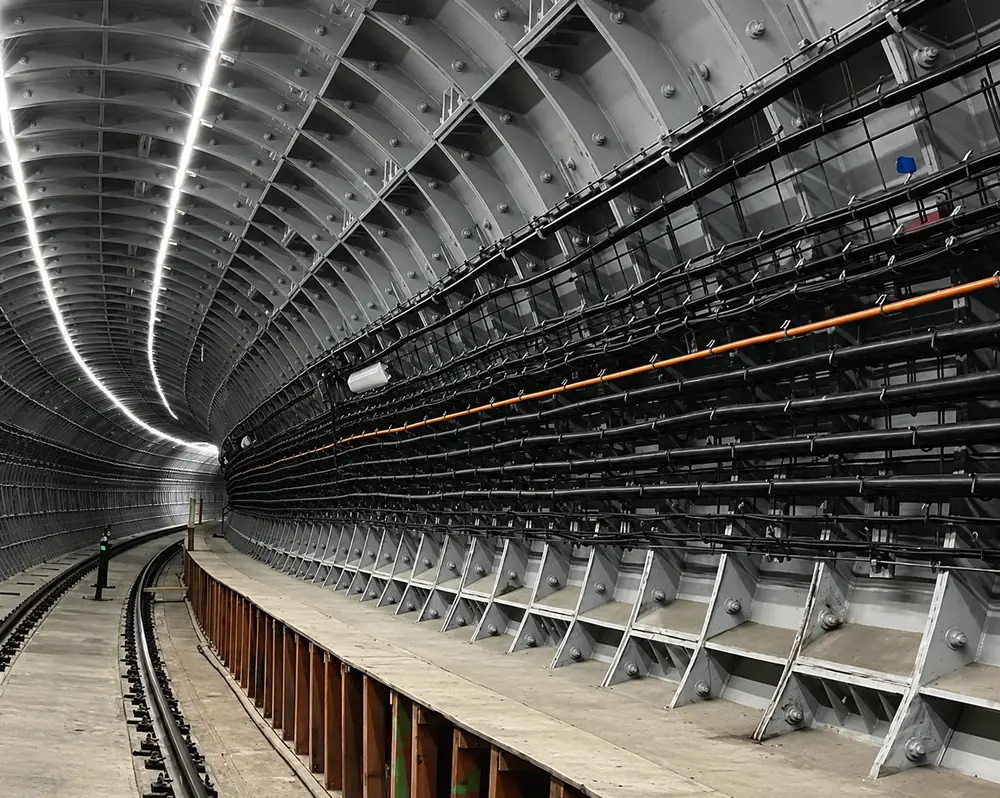
Consider what actually has to happen between a reserved connection and an operational AI compute facility: duct bank design and construction connecting the grid intake point to the building; high- and medium-voltage cable installation across what can be substantial distances, particularly where the zone's generation co-location means the connection point isn't immediately adjacent to the building footprint; distribution infrastructure inside the facility itself; and commissioning of a complete electrical system that has to perform reliably under continuous, high-utilisation load from day one.
"A reserved grid connection is a head start, not a finished project. The routing, the duct banks, the cable installation programme between the substation and the building — that's still a full construction problem."
Why this gap matters more for AI Growth Zones specifically
The routing challenge is arguably more acute for AI Growth Zone projects than for more conventional data centre developments, for a specific reason: deliberate co-location with new generation capacity, while excellent for securing power supply, often means the connection point and the facility site are not immediately adjacent in the way a conventional urban or suburban data centre connection typically would be.
This means routing decisions for AI Growth Zone projects frequently involve longer cable runs, more complex terrain and planning considerations along the route itself, and a correspondingly higher premium on getting pulling tension calculations, route design, and installation method right from the outset — because a route that fails on a long, complex run is a considerably more expensive problem to discover late than the equivalent failure on a short urban connection.
The projects that will actually benefit fastest
The practical implication, for any organisation involved in delivering AI Growth Zone or similarly strategically designated infrastructure, is that the planning and policy win needs to be paired immediately with serious routing and constructability work — not treated as a separate, later phase that can be addressed once the celebratory announcement has been made.
- Route feasibility studies should begin in parallel with, not after, the strategic demand application process — using the same readiness-focused logic that increasingly governs grid connection allocation more broadly.
- Cable installation method should be considered as a genuine design variable for these long, often geographically complex routes, rather than defaulting to conventional approaches that may struggle with the tension and access challenges that longer connections present.
- Specialist resource — for HV jointing, commissioning, and complex cable installation — needs to be secured early, recognising that AI Growth Zone projects are competing for exactly the scarce specialist labour pool that other strategically designated projects pursue simultaneously.
- Documentation and as-built recording should be built into the routing strategy from the outset, both because of the general regulatory direction toward better infrastructure records, and because these are exactly the kind of long, complex, high-value routes where good records most directly protect against future disputes or access problems.
UK Government, "Accelerating electricity network connections for strategic demand," consultation, 2026; Planning and Infrastructure Act 2025; UK Government, "Government to tackle speculative demand grid connection requests," November 2025.
AI Growth Zone status is a genuine advantage, and the policy mechanism behind it is a sensible response to a real problem. But it's a head start in a race that still has to be run — and the teams that pair the planning win with immediate, serious routing and constructability work will be the ones that actually convert reserved capacity into operational compute capability on a timeline that matches the ambition of the announcement.
Talk to us
Working on AI Growth Zone or strategic demand infrastructure?
Strategic demand projects benefit from routing and cable installation feasibility being assessed in parallel with the connection application. We're happy to discuss early-stage route review.